Which Steel Is Best for House Construction?
Steel is the part of your house you will never see again once the concrete is poured — which is exactly why it deserves attention before it arrives on site. Here is how our structural team thinks about it.
What TMT steel actually does
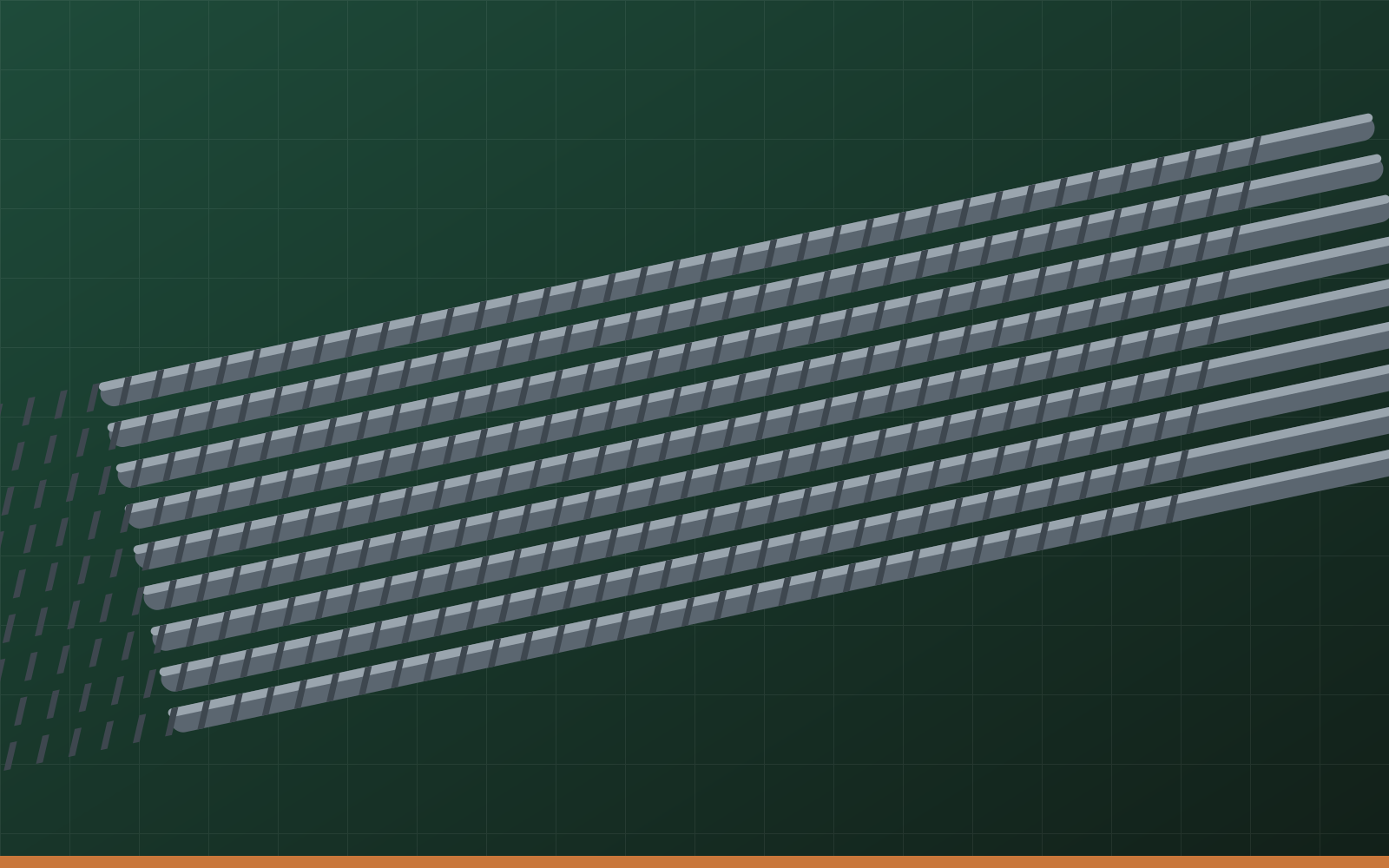
Concrete is excellent in compression but weak in tension. Thermo-Mechanically Treated (TMT) bars carry the tensile forces in beams, slabs and columns. The ribs on the bar lock into the concrete so the two materials act together.
Fe 500D or Fe 550D?
The number is the minimum yield strength in N/mm². The “D” suffix means higher ductility — the bar stretches more before it breaks, which matters in earthquakes and settlement. For most G+1 and G+2 homes, Fe 500D is perfectly adequate; we often specify Fe 550D where it lets the engineer reduce congestion in heavily loaded columns.
| Grade | Yield strength | Typical use |
|---|---|---|
| Fe 500D | 500 N/mm² | Most independent homes |
| Fe 550D | 550 N/mm² | Heavier loads, G+3 and above |
| Fe 600 | 600 N/mm² | Specialised structures |
How to check steel on site
- Look for the BIS mark and brand embossed on the bar at regular intervals.
- Ask for the mill test certificate for the batch delivered.
- Weigh a sample length — under-weight bars are a red flag.
- Bend test: a good bar bends without surface cracks.
- Light, uniform surface rust is acceptable; flaky, pitted rust is not.
Common mistakes
Welding TMT bars (it weakens the heat-affected zone), skipping cover blocks, storing bundles directly on soil and mixing grades without telling the engineer are the four we see most often.
How much steel does a home need?
As a rough guide, residential frames use 3.5–4.5 kg of steel per sq ft of built-up area. Your structural drawings — not a thumb rule — should decide the final quantity.
Choose the grade your engineer specifies, from a brand that gives you a test certificate, and make sure it is stored and placed correctly. That is 90% of getting steel right.